
J. T. Trigonis
Poets & Storytellers Open Interview Date: 2026/03/13
“…in the poems, (cars have) become a metaphor for “broken down,” right?… It’s just this idea of the soul being broken down constantly… as we live, we get broken down by the world we live in. The older we get, just like a car, right? It gets older, it's not going to last forever. Hearts break, shit happens. But there's always this idea of repair…”
- J. T. Trigonis
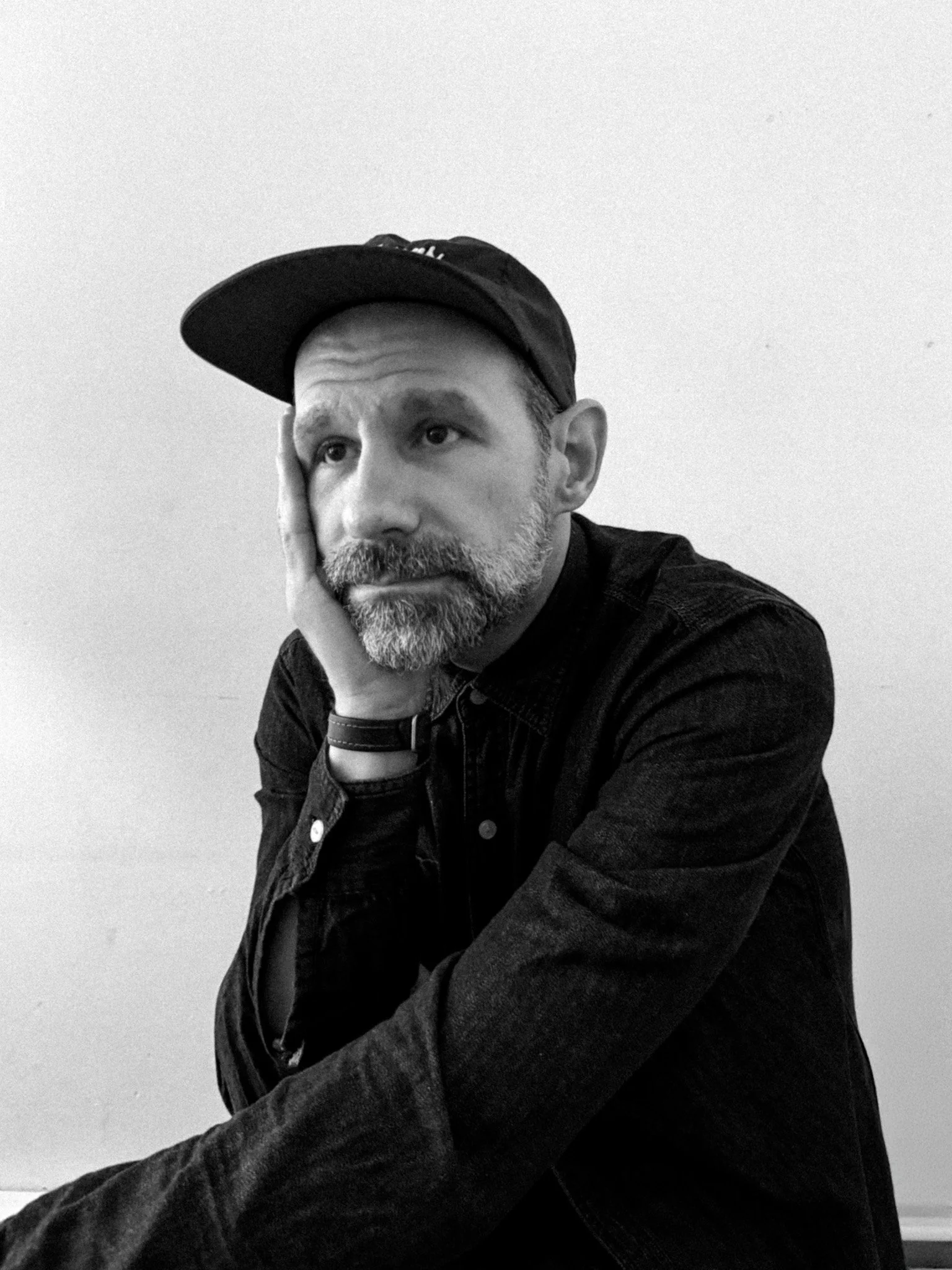
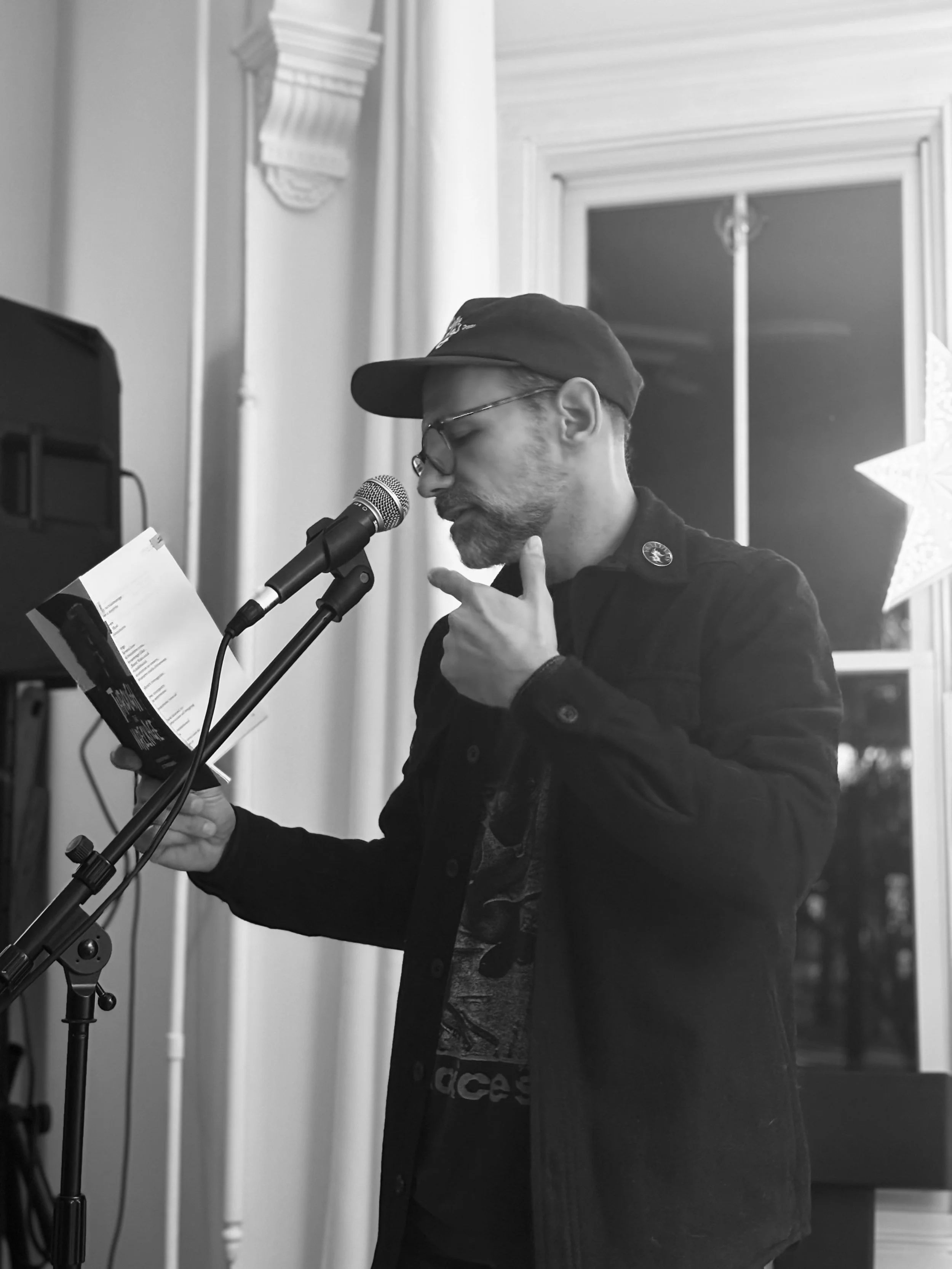
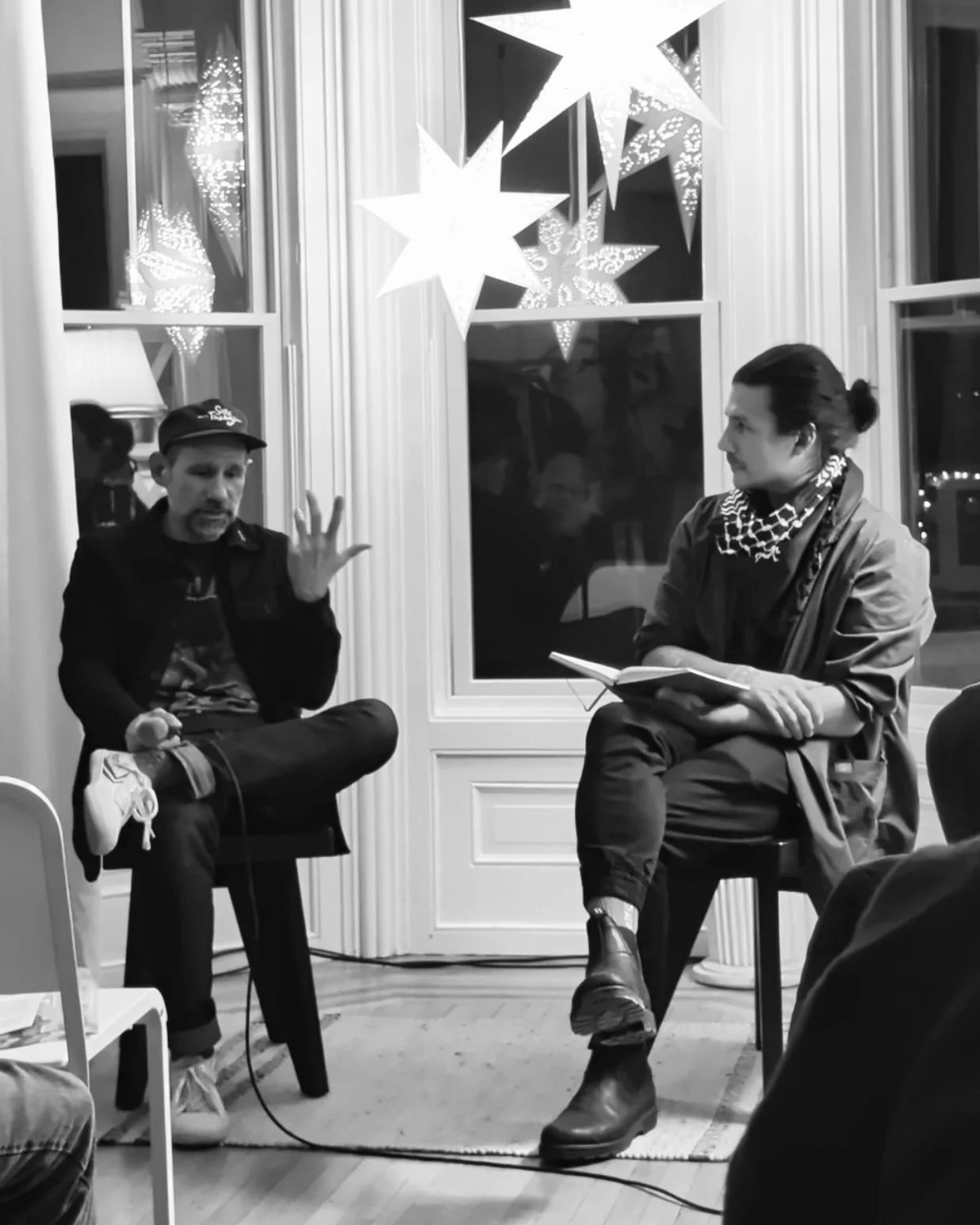
Gregg Yupanki Bautista: So in the vein of poetry event organizing, you wear a lot of hats. You’re a writer, you're a teacher, you're an event organizer, a co-shop owner, and a publisher. That’s a lot of things to do at once. How do you-
J.T. Trigonis: Now you bring it up… Jeez. Gotta lessen a few of those things. (Laughs)
GYB: Yea, how do you balance out your time and, and what does it look like deciding when you do which things? How does that part of your life work out?
JTT: Damn, yeah. That’s a tough one to start with. I don't know if I do. I mean, Marinell would say that I'm pretty good at balancing my time, but I'm pretty strict with specific things that I want to do. So I make time. I know it sounds like, “how do you make time? You’ve got so many things you're doing.” I've been making time and part of that is just… for example, I teach, I'm an adjunct professor, I teach at two schools, teach between three and four classes. So it's a light lift, I make sure I can pay my bills, obviously. But I don't really make more than that, you know, like a little more than that, because I don't want to just be working for the money. I want to have time. And ever since I've been a kid, that's all I've ever wanted, was time to just do what I want to do. I never believed, and part of me still doesn't believe, that you can really make a living as a poet or a writer, unless you're, you know, selling out or you're doing more than you writing fluff that's just, you know, that Harper Collins is going to pick up… and no offense if anybody's published by Harper Collins, you’re making more money than me. (Laughs) But yeah, I just always wanted that time.
So with poetry specifically, poetry is the thing that it has to hit me, or I don't write it. I'm fortunate that it's been hitting me since I was 13 years old, like, on a regular basis. I've never really believed in a writer's block because it's always something hitting me. Is it always good? Of course not. A lot of shit sucks. I have journals full. But then when the good stuff comes, you kind of know.
With other kind of writing, I have to sit down and just be like, “all right, I'm going to write.” I'm a short story writer, I write, weirdly enough, short flash horror fiction gets published and I'm like, “it's not what I want to write,” but it gets published and it's cool and I get $4 every now and then from Australia when they accept something (laughs), and I'm think, “this is great!” And then I see how much it's taken out and I'm like…
GYB: “Less great.” (Laughs)
JTT: Yea! Like, ok, “kind of” great.
But I have to literally sit down and say, “all right, we need to do this”. And then I procrastinate a little bit with that. Because then there's other shit that has to be done.
I'm also the business side of the business. I'm trying to make sure that’s all copacetic with all the things that a business has to be copacetic with as much as possible. And then the teaching, like I say, the hardest thing about that’s the grading... So once I schedule time for that, everything else is just gravy in terms of time management and having it.
GYB: Do any of those play a role in your writing? Because you were saying during your reading that you, as a poet, want the work to be about a real thing… How much of those other roles end up folding into your poetry or showing up in your prose writing?
JTT: Like in terms of writing about it?
GYB: Yeah.
JTT: Not much, no. Like, I've never written about being a shop owner, I've never written about being a professor. I kind of keep them separate, it's kind of weird. But poetry is, for me, trying to figure out what the fuck's going on in the world, in universe and me, inside, outside, all that sort of thing. So it's very introspective or it's very based on a visual image that I'll see, and it'll just trigger something, and I'll get a first line, and then I'll go with it.
I don't think I've ever really kind of blended all those. Like I don't write horror poetry, unless you count “Bodies.”* That could be a horror poem, technically, but it's a real poem. It's real shit. So there's something to be said about horror, I guess, in that sense.
* “Bodies” is a poem JTT read during his performance, found in his recent book, Through The Wreckage.
GYB: Yea, like you were saying, horror can be a reflection of everything else happening.
JTT: Absolutely, yeah.
GYB: And I'm also interested in how you're talking about writing short stories versus poetry. Are those different headspaces when you sit down to write? I don't mean to ask such a simple question to you, but do you sit down with the intent to write a poem or a short story or is it more so how you were saying there's no such thing as writer's block, so you just start by writing?
JTT: Yeah, it's kind of like that with the short stories. With the poetry, like I said, it's got to be inspired… I've never said, “all right, I’m going to sit down and write a poem,” because I don't think that's how you write poetry, for me. And yes, it's kind of cheesy to say, “I gotta wait till I'm inspired to write poetry.” But it's true. I don't have to wait because it's there, you’ve just got to look around and be interested enough, curious about everything. And I am. And I've kept that since I was a kid. I have not lost that just yet, and I don't plan on losing it.
The writing, the other kind of writing, a lot of the horror stuff that I write… I do write sci fi, but nobody's picked that up yet, because that shit's hard. With horror, I'm doing a lot of prompts. I do a lot of monthly prompts for these people in Australia, and I've gotten like two or three things published, but they're hard. I’ve been submitting for two years, so two or three things is pretty bad. I don't know why I'm still doing it (laughs), but the prompts, they just get me thinking and it's like 100-word stories. So it's quick, I like the constraint of it, but I literally have to sit down, usually towards the end of the month, and be like, "Damn, The Dark Moments is due. I got to get this done.”
And luckily, my buddy Raul does it with me, so we kind of keep each other accountable. And then we share our rejections, and then we share our… Well, he hasn't gotten accepted yet, but I'm sure it's going to come because some of his shit's a lot better than what I'm writing. But it's blind submission, so I don't know. I just get lucky, I guess.
GYB: Can you talk about that a little bit? The rejection rejection portion, because that's something that you as an event organizer, but also as a publisher, are very open and transparent about. About how rejection is difficult, but it's the reality of it.
When you were coming up as a writer, how did you deal with that and how, over the years, did you develop this skin to be able to accept that as part of the process?
JTT: Yeah... So somewhere in my brother's basement, I have a binder that is filled with all the rejection letters I have ever gotten. Super fucking cliché. I'm talking like… I've been doing it since the '90s and you'd have to send your self-addressed stamped envelope, they send it back to you, basically you pay for your own rejection. And then I'm like, “well, I'm not going to throw this out. This is a rejection from City Lights. This is a rejection from some magazine, and this is a rejection from this. Like, I gotta keep these.” So I kept them.
I just kept on piling them up. The binder’s this thick, no shit. (holds up cupped hand showing binder’s thickness) It's probably water damaged because my brother's basement flooded numerous times, so they're probably all gone. But if they're not, I want to do an art exhibit of my rejections. (laughs) And I just, I don't know why I started doing it, except somebody spending money to send me these pieces of paper. I’ve got to save them. And, yeah, it was depressing at first, because I'd send out like 80 manuscripts a month back back when I first started doing it. Mailed. None of the Submittable stuff yet. And I would get these rejections, and then out of 80, I would get one or two acceptances and it was like, “gold.”
But then I'm like, damn, I just spent a lot of money on this, sending these rejections and then these other accepted ones don't even pay. I just get a copy, maybe. So it hurt at the beginning, like it should, because then you're like, “oh, man, should I even be wasting my time? Should I just play sports or some shit? I don't know. What should I be doing with my life?” And then you get those rejections and it just changes everything, and then you get a bunch of rejections again.
So now what I do, and people love this and, I don't know, they get inspired by it… Every time I get a rejection, I post it on Instagram and on my Stories. Like, immediately. And I remember one person came up to me and said, "Oh, man, you know, your rejection letters are so inspiring." And I still don't know how to take that. Like, should I be flattered? Cause ain't fun. (Laughs) I'm just doing it because the same kind of thing is, well, I got the rejection. And I'm basically showing people this is the process, you know? And yeah, when I get an acceptance, everybody on Instagram goes, Like! Like! Love! This is amazing! And then when I get rejections, everyone goes LOVE! LOVE! and I'm like, “what are you doing? Don't press the button, it’s bad enough you saw it.”
But people are getting inspired. And I know for a fact it's made people like get off their ass and like actually start submitting work, which is great. And, you know, I hope when they get rejected, they send it to me and then I'll double tap it too, and I'll give it a heart because why not? It's all love, it's all part of this whole thing we do.
GYB: It’s funny to think about how you're sharing that with people and the idea that them liking the rejection might trigger all these dopamine signals for the wrong reason with you not getting accepted. Like “good, you didn’t get it.”
JTT: Yeah, exactly.
GYB: And your binder story reminds me of this story Stephen King shares about his own start where he had a nail in the wall and he would just start tacking all of his rejections onto it. So yea, keep sticking those rejections on there.
I'm sure that one day it would be great to look through that because I think it's empowering to still be doing what you're doing despite that binder being full.
JTT: 100%. I did keep one, I have it at my apartment. When I was trying to get into the New Yorker, when I thought the New Yorker was the big ship, for a poet anyway. I mean, it technically is because it's probably a top magazine you can get a poem published in, right? But I sent, I must have sent numerous ones to them and I always get rejections. I thought, “all right, this is like my fifth rejection.” I threw it on the floor and it flipped over, and there was writing on the back. I grabbed it, and it basically said, “these aren't quite right, but we look forward to more.” And I was like, “Fuck!” I don't even know who the editor was. I didn’t care, really, but the fact that they took a minute to write that on the back of it… Number one, they must have kept seeing my name and saying “man, this is bad,” and the fact that then they got something that was “almost there!”
I don't submit anymore because it's all digital now. The rejections aren't the same.
GYB: More streamlined now.
JTT: Yeah. It's like “send me the thing.” I wish I could send them. That's why I like the Patterson Poetry Review. I send them things and they still accept the self-addressed envelope. So that’s something special about them. Nostalgic, if you will.
GYB: So then as a publisher yourself with BY THE WAYE magazine, what role does rejection play from that perspective? Like being the editor?
JTT: Sucks. (Laughs) Actually, just yesterday, I had to reject some friends. That was fucking hard. But again, with the magazine, we don't do blind submissions, but I picked two guest readers, and then Marinell and I sometimes read if we can't find agreement in the poems that we like and we want to include. But this time around, the folks I chose, they were tough, just as tough as me. Tougher, actually, if I'm being fully honest. They're younger, too, which was like… I'm fueled with some hope for the future here. But it was kind of hard, because some of the stuff that was sent from some people I've known for years. The guest readers just weren't into it and I would see what they meant. So it was hard to send those letters out. But it's a part of life. I mean BY THE WAYE is never going to be a magazine that just pay to play, you know, or where it's like, “you know, because I go every month and because of this, we're automatically in…” No.
These are different people we're choosing because I need the content to be fresh and interesting and new all the time. And when I read it, I want to see different things too. I don't want to see the same stuff, you know? So that's why we do it. But this was the first time where I was like, “wow, rejecting is tough,” doing it through that platform.
I have to say, though, the rejection letter that I wrote that I wrote up is pretty solid… Like, if you’re ever rejected from us, you feel good. (Laughs) But the other thing is that we get about 100 submissions or so, so we're still relatively young in that sense, so I can actually read the work and give a little bit of feedback in the rejections in some of them. So if I know the person, I can say, “this poem came close, here's what the people said.” And I feel like that's something I wish I'd gotten a few times. I’ve gotten it from some of the places I've submitted to, the unsolicited feedback. But when I read it, it was welcomed because they took a minute to write it out for me. It helped me become a better poet.
So I'm trying to make sure I do that whenever I can, especially if I know the person, or if I really just read the poem and I liked it but the readers didn't, I still feel like I can give you a little feedback. And what's the worst they can do, you know? Say “thank you, Trigonis” or, you know, “fuck off none of your business.”
GYB: “I’ll go start my own magazine.” (Laughs)
JTT: Yeah! And more power to you, go for it. I will submit and I will be proud to get rejected.
GYB: I like the idea of what you're saying about keeping the magazine fresh, keeping it feeling new. And that seems important because even though WAYE Poetry is built around the Jersey City community, I’d imagine you want people from other areas to be part of the DNA of what WAYE is, even if it’s through the publication. It opens your platform up to new audiences and participants.
JTT: Yea, and visually, Marinell does the formatting and putting it together. I just edit some poems, man, it’s no big deal with me. She does all the work and the heavy lifting.
GYB: One last question for me before I offer the Q&A to the audience. I know you jokingly mentioned that you write about more than just cars, but when reading poetry I enjoy trying to look for the mechanisms poets choose or things that they use as a preferred object of metaphor. And I'm wondering what the draw of cars, specifically old classic American cars, what the draw is for you, the significance of them in the work.
JTT: Great question. I grew up in the 80s. We had the best sports cars ever. Lamborghini, Chevy Camaro. Corvette. Mustang's fine, too. I have my favorites. And so in the poems, they've become a metaphor for “broken down,” right? Even the way I write the word “brokendown,” it's one word, it's not two. It’s just this idea of the soul being broken down constantly… as we live, we get broken down by the world we live in. The older we get, just like a car, right? It gets older, it's not going to last forever. Hearts break, shit happens.
But there's always this idea of repair. And I'm just thinking about my current car… I don't drive any of these sports cars because I can never afford one of them. I mean I’m in my midlife crisis time and I'm like, “I can't afford my Camaro, what the hell? Like, I can't afford my 1980s Camaro…” (Laughs) But I drive a Scion XD and I love it, it's like my favorite thing in the world. It's got a CD player, and I listen to CDs all the time. It's from 2008, it’s just the greatest ride ever. And I almost lost it… See, I love cars, but I don't know how to take care of them except check the oil. This thing, I have an oil leak. And they told me, “you can't fix it. You're not going to be able to afford it.” I'm like, “who are you to tell me I can't afford it?” And they told me what they have to do. And I say, “you're right, I can't afford it. Can I still drive it?” They tell me yea, I just have to check the oil regularly and put more in. I didn't do that one time, barely got home from a trip to Kingston, and it died on me and they took it. I thought it would be gone for good and I literally emptied the car. I even sat in it and I said “goodbye.” It was so stupid. This was only like last year. I watched it get taken away by the tow truck guy, you know, and I thought, “oh, I'm never going to see it again. I'm going to get the phone call tomorrow, ‘can't fix it. I'll give you 100 bucks for it.’ I'll be like, ‘sure.’” And they called me and said it was just the alternator, it seized. I'm like, "How much is it?” “It's 1,200 bucks.” “Fix it.”
And it's just that idea of keeping this thing going.
So the car is a metaphor for us and keeping us going regardless of what this fucking world has to do to break us down, we’ve got to try to keep going as long as we can. Whatever that means. So that's what it's kind of become to me, and even Through the Wreckage, you know, a car crash, is a constant metaphor. I've never really been in a car crash, just the idea of a car crash and making it through that wreckage and coming out on the other side of it as something better.
But I also just really like cars that I can't afford and can’t ever drive. (Laughs)
GYB: Alright, any folks have any questions for John?
Audience Member (AM) 1: I have two… well, one is not a question. This goes to the book by Jerry Saltz, How To Be An Artist. I forget what number it is, there are like 20 things, but he said, you’ve got to have develop a thick skin. And you posting your rejection letters is you showing how much of a rhinoceros you are.
JTT: Thank you.
AM 1: Don't look at it the wrong way, I get the irony…
JTT: I like this better, believe me. (Laughs) I'm totally in.
AM 1: You mentioned the beat poets, you mentioned cars and diners, and I feel like somehow they belong in a blender together for you. What’s not about? Is it just like the whole New Jersey scene? Garden State?
JTT: I'm Jersey to a fault, I guess… I think I mentioned my dad worked at diners. As a kid I used to sit at the diner at the booth, because my mom died when I was pretty young. I think I was six years old when she died, so my dad had to get multiple jobs, and he'd have to bring me to the diner and sit me at the thing.
I'd have my toys out, playing while he's working and then I would draw pictures of the owner, and I'd make all the waitresses laugh. So I constantly have waitresses in my head, like the ones that I remember from my childhood, always just laughing because I’d draw like a light bulb head of the owner who's bald. They got a kick out of that shit. And then the cars… It’s just, you know, the Turnpike. You just gotta love the Turnpike. I mean, shit, it was in “Being John Malkovich,” when you get spit out of John Malkovich's brain, you land in the Turnpike. Like, how cool is that?
AM 2: They wrote that for you.
JTT: (Laughs) Yeah, I was like, “this is SO my movie.” So, yeah, it's all Jersey. But it’s kind of like this blended world, and I'm also like a bit of a film noir geek. So I love that kind of landscape and I feel like Jersey just oozes film noir in a lot of ways. I mean, Hoff, a dead body laying somewhere, you know, all that mafia shit. It's just so much fun. I don't know.
AM 1: Yeah, it's really interesting and of all the places I've traveled in the world, there are almost no diners like in NJ.
JTT: I mean, you might find a Denny’s, but they're not diners in this way.
AM 1: Nobody knows what they are unless you have lived in that vicinity.
JTT: 100%. Yeah.
AM 3: I just want to double up on what you said, because you know, especially for younger writers, right? Like to have someone like you and the different things you've done to the different things you're doing, kind of shows a vulnerability because ultimately it's like you said, that's so much of what we do is about is that rejection. It can be so humbling and deflating for people, and just instilling that patience and that just “stick with it!” because I, too, have been there, I'm still there. That's just so powerful. So I just wanted to commend you for that.
JTT: Wow, thank you. Appreciate that.
AM 3: I also wanted to ask you a quick question. So you talk a little bit about WAYE and the magazine, and so what's the origin story for that? Like, what did you think that, you know, about bringing WAYE into the world and what was it going to do that was going to be different?
JTT: Good question. So we started a shop in Jersey City called Sure Things. It's a vintage shop, used bookstore. And I've been a part of the poet community since the '90s, since college. On and off in Jersey City mostly, and a little bit of New York back in those days. So it was a natural kind of evolution to do like one event that we maybe hold monthly, and it would be a poetry reading. Marinell came up with the name. I was like, what are we going to call it? She's like, "What about this line from the rejection letters? ‘We appreciate your enthusiasm.’ We'll call it WAYE for short.” I’m like, "Brilliant! Great, let's do it.”
There was a great open mic in Jersey City that was happening in a bar every month and they stopped doing it after the pandemic because they just couldn't sustain it. And the next month we launched WAYE, so we had a lot of people coming to us who would normally go there, and it was the same night of the week, on Wednesday. So I knew people were available to go. And that's kind of how it started.
I run it basically the way I've seen every other open mic through from the 90s up until today. I mean, today they get run differently, like each open mic does different things. Like you have the Q&A here at Poets & Storytellers, The Poetry Unfold in Union City has an open forum that they do after every poem a poet reads. But I'm all about nostalgia and, you know, what I remember. So I was like, “all right, we're going to do sign ups at the door. None of this online shit. We're gonna cap it at five minutes and just be very specific, cash-only cover.” And then the one thing I wanted to do was I wanted to make sure that, because again, it was unheard of for so many years, I wanted to make sure we could somehow pay our poets. But of course, we're a small business, so we can't. So we charge $5 at the door, and 100% of that money goes through the featured poet.
For the night, if people buy some books from us, or a piece of pottery, great, we get a little paid, but we don't take any of that entry fee, because we do believe that if you're doing a feature set and if we're able to, you know, you should be given a little something when possible. So I've been very proud of that because we do this, like as poets. And this (motioning around the room) is enough, you know, obviously, but it's nice when you can afford a cup of coffee on someone else’s dime for a couple of days.
AM 3: At the diner.
JTT: Yes! (Laughs) I'm trying to give you the cutdown version, but from that, our friend Caitlin kept on telling us, “you know, you really should go for some money from the city. And I'm like, ah, we don't need any money. We got this shit covered. We don't need money to run the open mic. People pay $5. Poets get paid, Everybody has a good time, we’re there late, putting things back together, but whatever, you know, it gets done.” And then she asked if there was anything else we wanted to do? And I'm like, “oh, a magazine would be nice.”
So we hired her to write the grant proposal, because I tried to do a grant proposal, and that was not getting past the name section. (Laughs) She has patience and we paid her for it. And she got it done and we submitted it, and we got a grant! We didn't get everything we asked for, but we did get a substantial amount of money to do this magazine, or to try it out. So because of that, that's why we're doing it. We're able to kind of give ourselves a tiny bit of that. But the majority of the money goes to printing, because printing is expensive. But we've now got two issues. One grant cycle done. We're in the middle of the second grant cycle. We did get it a second time, which is why we're still doing the magazine. And we've got issue three we're working on now, we're going to launch issue four's submission call later on in the year. And we'll have the next one out by October.
I love print, Marinell loves print. We used to work on a magazine in Jersey City called 80 Magazine back in the day. It was like a culture broadheet. So she has a background in printing and graphic design, and I just know words. So we put those skills together and, yeah, we try to do something good for the community that uplifts as much as we can.
And it’s growing already. So again, the submissions have been getting a little bit crazy. This submission window was a lot, it was almost 100, just under. It's a lot to read. But then our first, I think the first issue was, what, 40 submissions or something, maybe 60?
Marinell: Yeah, like 60 submissions. We were expecting 20.
JTT: And I would have been happy with 20! I would have been like, “this is great!” People want this! But 60 was like, holy shit. And then we're like, “who are these people? Wait, California? Wait…”
GYB: And it's not only the amount of submissions, it’s like three to five pages per submission, and I think up to 10 for features or something like that. So it's a lot of reading.
JTT: Right, some people submit like 20 pages and it's like, yep, that's a lot of reading. But it's great. So yeah, that's the inception. What’s next, who knows? We have ideas of what we're going to do next if we do put in for the next grand cycle. And hopefully I've addressed everything they wanted us to address, and we get the full amount, and then we have an idea of how to expand it even further. So I'm excited about that. We'll see where it goes.
It's funny, I took some time off and stopped submitting work because I was just like, you know, I don't “need” this. It's just like self gratuitous, you know, patting myself on the back. I went through a whole, like, you know, Buddhist kind of like self-less-ness, I'm just done.
And then Marinell, of course, was the one to say, “you know, you really should start submitting again. And show these people the way it's done.” Not in those words, but like, the idea of demonstrating that this is what poets do, we don't just post our shit on Instagram and hope that we get an audience, but submit it to find a bigger audience, a bigger magazine. Get it in the hands of people. And I was like, “all right, whatever.” So it's really because of her I have this damn book published because I would have never submitted a chapbook.
And I had stopped for probably like 10 years, at least, because it was just a lot of work. It's a lot of work to sit there in front of Submittable and like send, send, send. It's a lot. And then, how many cover letters do you gotta write? Like, Jesus, everybody wants a specific one and, you know, add this in there, and it's like a full time job.
Marinell: We found a vintage copy of Poetry Magazine from the 1950s and Sylvia Plath was published in it. So if Sylvia Plath is submitting to poetry magazines...
JTT: Yea, even she still had to submit... Get off your ass.
Poetry magazine has yet to accept anything, I have ten rejections, mostly in physical form. (laughs)
GYB: 11th time is the charm. (Laughs)
JTT: Yeah.
AM 2: There’s this one instance where a magazine accepted but revised my stuff, and I was incensed when they did it.
JTT: Did they even tell you?
AM 2: They did, yeah, they kicked it back to me. “We think this and we think that.” And then I talked to someone else about it, they said, “you know, there's the thing of having your stuff in the magazine, too. You gotta…”
JTT: It's a balance for sure.
GYB: Some magazines have their house style too.
JTT: Yeah, we have a house style. I have to change everybody's em dashes because nobody uses an em dash right. And I'm just like, “house style, man. I know you mean an em dash, but you just don't know how to use it. So I'm going to use it for you.” And I'm not going to tell everybody because we don't have that kind of staff. We’re not going to change lines or anything like that. There was one call I had to reformat because it just didn't look good on the page. I asked the poet, “I want to take it. Do you mind if I have a stab at the formatting?" And he said, "No, go for it." So I just broke it up into stanzas, and it worked a lot better.
But sometimes, yeah, I mean, if we had the staff, I would love to entertain those things, because I think sometimes there's good poems, like spoken word artists will try to submit to magazines, but it's just this one long block of text. And it just doesn't look like a poem, it doesn't look good on the page. But they might not be used to it. They don't know that you can break these things up into stanzas or you may have to just reword things a little bit. So a lot of times, I would love to do that or at least have them take a go at it, but you just got to know if they're willing to.
Even me, somebody accepted one of my horror stories, my longer ones. And they said, “yeah, we have some suggestions.” And I was like, “hmm,” that was my first thing. And I'm thinking how they’re like this online thing, it's not in print or anything, but that's my old school mentality. So I'm just like, “you know what? Send it back to me. Let's see what it is.” They sent it back, they took a few details out, and I say, “I get it. I totally get why you did it. Go for it, that's better, I can see it now.” If this was in my 20s, it'd be like, “screw you,” because one of the first things I was gonna get published, somebody said they wanted to change the ending and I said, “no, I'm not going to do it.” That was me at 18, “no.”
GYB: We can grow out of our ego.
JTT: 100%. And that's all it was.
Back to The Interviews